
Basic Woodworking: Simple Bench 1F26
Age Group:
Adults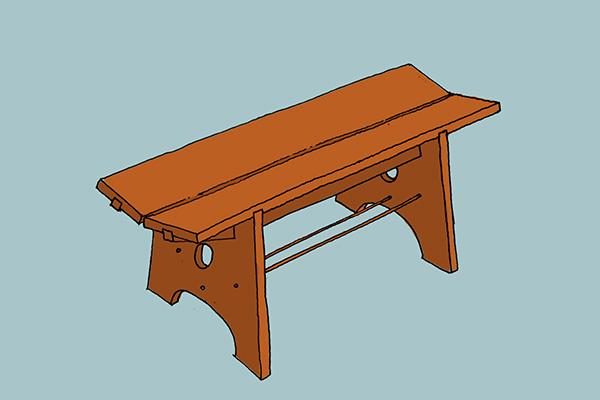
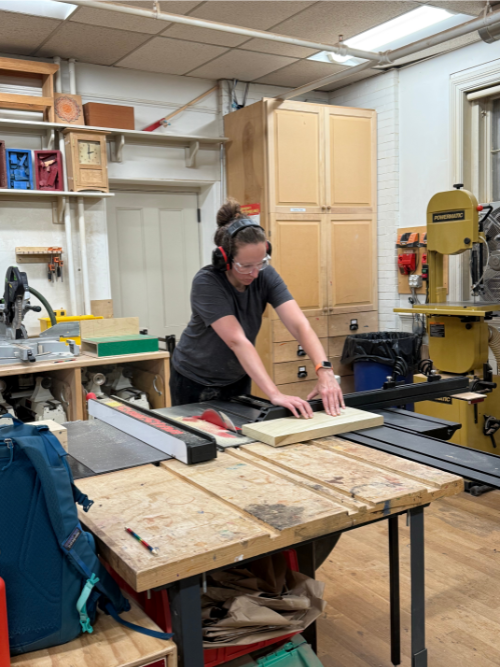
In this introductory woodworking class, students will learn how to safely use and care for the basic hand and power tools used in making wooden furniture. Woodworking is a craft of tolerances: knowing what must be precise and where creativity can flow. Through building a simple bench, students will balance the functional requirements of the form while also considering the basic elements of sculpture in their design: form, proportion, color, and texture.
Students will learn how to plan their project, mill lumber using the jointer and planer, cut parts to size on the table saw, refine joinery with hand tools, shape parts on the bandsaw, and assemble the bench using drills and dowels. While we will discuss surface treatments such as sanding, painting, and finishing, these steps may take place outside of class time.
This class qualifies students for intermediate woodworking classes and Woodworking Open Shop, serving as a gateway to more advanced woodworking study at the Eliot School.
* This class is highly sequential: the skills learned in each session directly build upon one another in order for students to complete their project and develop a foundational understanding of machine use. Students must attend all class sessions. Missing a class will require scheduling a make-up lesson before continuing in the course. If you know you will miss a class, please notify us at immediately.
Isaac Gewirth

Isaac Gewirth is a Boston-based designer and craftsperson. They earned their BA and BFA through the combined program between Tufts University and the School of the Museum of Fine Arts, where they studied material culture and studio art. Isaac has a passion for understanding how things are made, loves spending time in the woodshop, working with their hands, and experimenting with different methods and processes of making. Isaac’s practice seeks to reconcile their identities as a woodworker and designer with their political commitments, examining themes of status, taste, quality, and ethical consumption. In the classroom, they emphasize process over product, fostering a collaborative, lighthearted environment—filled with music, lively conversation, and plenty of curiosity.
Website:
Specialty:
Sculpture, Woodworking, Drawing
Materials to bring to class:
All lumber is provided in class.