
Ten Cool Techniques for Gelliprinting 1W25
Age Group:
Adults
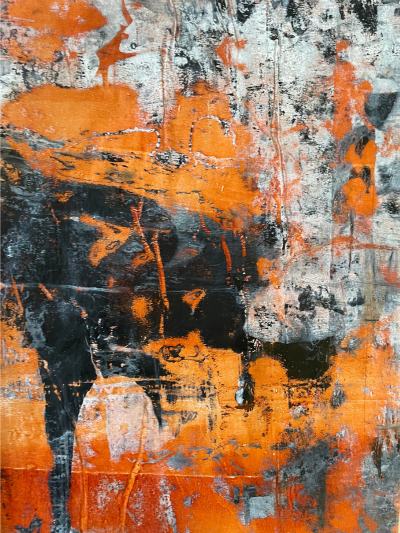
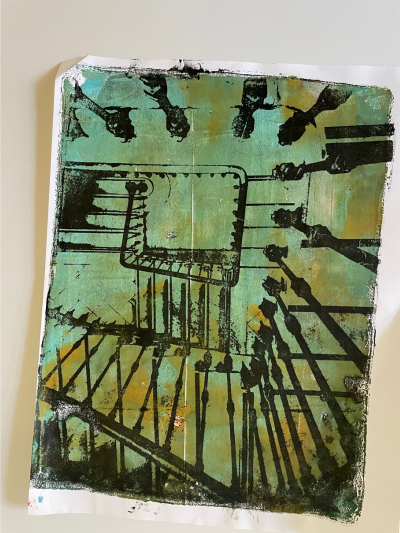
In this workshop, I will talk about and demonstrate ten interesting techniques for using the gelliplate. I will also talk about some basic concepts related to gelliprinting and discuss different types of paint and paper. Students will then try out these techniques on their own, using most of the rest of the workshop to perfect these techniques and make multiple prints using the techniques they enjoy the most.
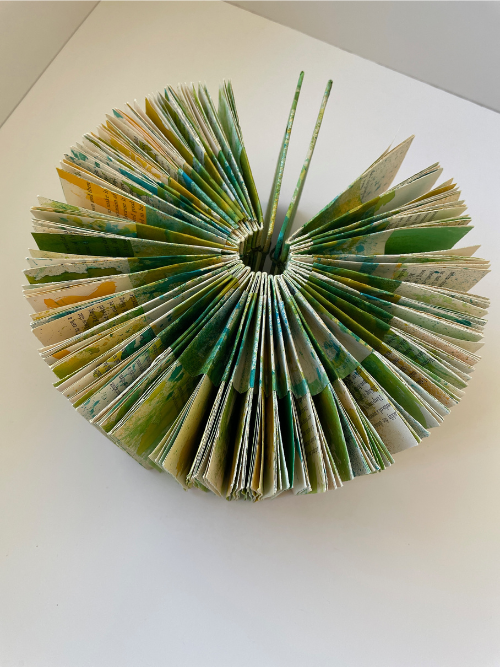
Close to the end of the workshop, I will discuss ways that gelliprints can be used and show some examples of things made with gelliprints. These include collages, artists’ books, and coasters.
By the end of the workshop, students should understand that the gelliplate is a very versatile tool, one that allows them to create interesting papers or fabrics that can be used in multiple ways.
* The make up date for this class is Sunday, 3/30/24
Diane Franklin
Diane Franklin is an artist, teacher and writer living and working in Jamaica Plain. She makes large wall pieces from fabric and/or paper, using a variety of surface design techniques. Starting with white fabric or paper, she uses shibori dyeing, screen printing, painting,rusting, gelli printing , etc. to transform the surface of her materials. She then combines these materials into abstract compositions. Diane has exhibited her work in numerous group and solo exhibitions throughout the United States and has won awards for several of her pieces. For the past few years, Diane has also made a number of artist books and collages, using her own photographs or printed papers. Diane has also written articles about fiber related topics for Fiber Art Now and Fibre Arts Take Two. She is also the author of Dyeing Alchemy, a primer and workbook about Procion dyeing.
Her fiber pieces can be seen on her website, www.dianefranklinart.com, and many of her books and collages can be viewed on her Instagram account: https://www.instagram.com/diane.franklin/
Website:
Materials to bring to class:
Most of the tools and materials you will need for this workshop will be provided by the Eliot School.
You will need to bring:
- 3-4 small tubes of acrylic paint. Good, not-too-expensive brands are Liquitex, Amsterdam, Dick Blick or Utrecht acrylic paints. These should be a mix of transparent and opaque paints, preferably 2 transparent and 1 opaque. If you already have acrylic paints, bring more than 3 colors. If you have any metallic paints, please bring those. Do not bring cheap craft paints since you will not get great results using them.
- Any interesting papers you might want to print on in addition to the white papers that will be provided to you. These can be junk mail, papers you've drawn on, existing prints, old book pages, sheet music, etc.
- Some small ( around 8” by 10”) pieces of light colored fabrics. These can be fabrics you already have or fabrics cut from a recycled garment. The fabrics should be woven, not knit.
- Any stencils that you already own.
- Small pieces of recycled materials that can be used to lift paint from the gelliplate. These can be different types of packaging materials with texture, an old sink mat, small circular containers, cotton swabs, pieces of lace, etc. Nothing should be sharp.
- A package of plastic page dividers or any kind of thin sheet plastic you already have. These will be used to cut masks. A Tyvek envelope will also work.
- A few magazine pages with interesting images on them to be used for photo transfer. High quality magazines such as Vogue, Elle and others like that work best for this process. Another option, if you have a laser printer, is to print out high contrast black and white photos that you’ve taken. 4 by 6 prints are a good size, and they should be printed on plain copy paper.
- An apron or smock to protect your clothes and lightweight vinyl gloves if you're worried about getting acrylic paint on your hands.
If you have questions about materials to bring, please email the instructor for guidance: .
Also, please bring lunch, snacks and water.